

Illuminated Channel Letters for Long Island Businesses: What to Know Before Choosing a Storefront Sign
Yes—illuminated channel letters are one of the most effective storefront sign options for Long Island businesses that need visibility after dark, a professional exterior presence, and durable branding. The right design depends on your municipality, building facade, landlord rules, lighting style, budget, and permitting requirements.
Illuminated channel letters give Long Island storefronts stronger day-and-night visibility
For many retail stores, restaurants, medical offices, fitness studios, salons, and service businesses, illuminated channel letters are the difference between being noticed and being passed by. Unlike flat wall signs, channel letters are three-dimensional, individually formed letters that can be internally lit with LEDs for high visibility and a polished commercial appearance.
On Long Island, storefront competition is dense. Businesses in Seaford, Massapequa, Wantagh, Garden City, Huntington, Rockville Centre, Babylon, and other commercial corridors often rely on signage to do two jobs at once: attract drivers from the street and reassure walk-up customers that the business is established and professional.
A well-planned illuminated channel letter sign can help with:
- Nighttime and early-morning visibility
- Brand recognition from the road or parking lot
- A cleaner, more permanent storefront appearance
- Better visibility in shopping centers and mixed-use areas
- Consistent branding across multiple locations
If you are comparing exterior sign options, Empire Sign & Design can help evaluate your storefront, visibility needs, and municipal requirements through its commercial sign services.
The best channel letter style depends on your building, brand, and local rules
Not every illuminated channel letter sign is approved—or appropriate—for every Long Island storefront. The most common options include front-lit letters, halo-lit letters, and combination-lit letters.
Front-lit channel letters illuminate through the face of each letter, usually using acrylic faces and LED modules inside the letter cans. They are bold, bright, and commonly used for retail storefronts, restaurants, and high-traffic commercial locations.
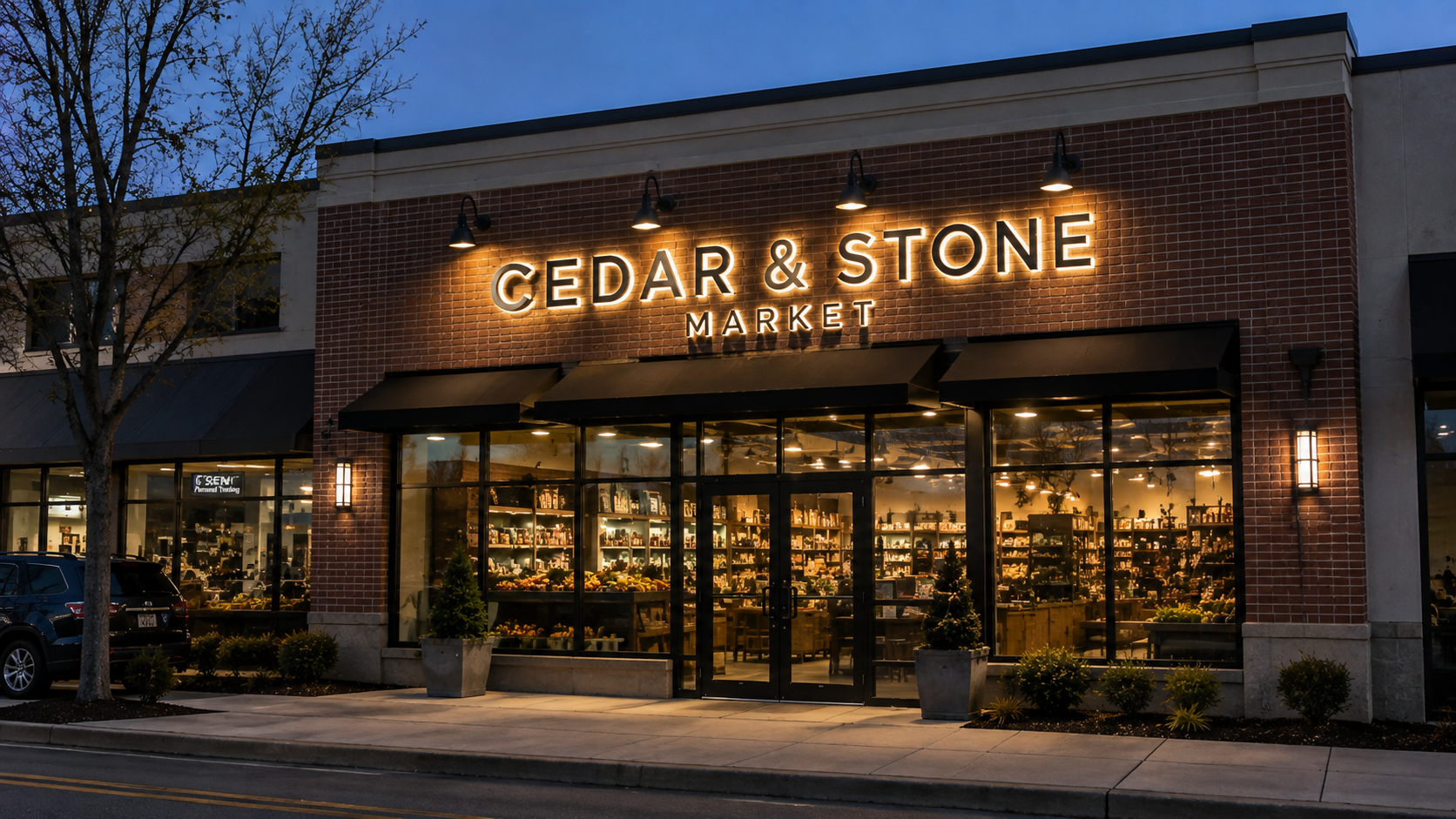
Halo-lit, also called reverse channel letters, illuminate from behind the letters, casting a glow onto the wall or facade. This creates a more refined architectural look and is often preferred for professional offices, upscale retail, medical practices, and historic or design-sensitive districts.
Combination-lit letters use both front and back illumination. They can create a premium look, but they may not be allowed in every municipality or landlord-controlled property.
Empire Sign & Design Local Insight:
In many Long Island municipalities, especially incorporated villages such as Garden City and historic downtown districts, exposed raceways and standard front-lit channel letters may be prohibited. Architectural review boards often require halo-lit reverse channel letters mounted directly to the facade, with wiring and LED transformers concealed inside the building wall or ceiling space to preserve the building’s appearance.
That local detail matters. A sign that looks perfect in a rendering can become expensive if it must be redesigned after review.
Local permitting can shape the final sign more than the design mockup
Long Island sign permitting is not one-size-fits-all. Requirements can change based on the town, village, zoning district, landlord criteria, facade type, sign size, illumination method, and whether the building is in a historic or architectural review area.
A typical illuminated channel letter project may involve:
- Reviewing landlord or property management sign criteria
- Measuring the storefront and checking electrical access
- Designing the sign to fit brand and code requirements
- Preparing permit drawings or documentation
- Submitting to the municipality or review board
- Fabricating the approved sign
- Coordinating installation and electrical connection
Timelines vary. A straightforward storefront sign may take several weeks from design approval to installation. Projects involving architectural review boards, landlord approvals, custom fabrication, or concealed electrical routing may take longer. The biggest delays usually happen when a sign is designed without confirming local code, mounting restrictions, or electrical conditions first.
For business owners planning a new opening, rebrand, or exterior upgrade, it is smart to start the sign process early. Waiting until the storefront is almost ready can put the opening date at risk.
Channel letter costs should be evaluated as a complete installed project
The cost of illuminated channel letters for a business on Long Island depends on size, letter count, lighting style, mounting method, materials, permitting, installation conditions, and electrical access. As a general planning range, many commercial channel letter projects fall between $3,500 and $12,000+, with larger, premium, or more complex installations costing more.
Costs may include:
- Site survey and measurements
- Design and production drawings
- Aluminum letter fabrication
- Acrylic faces or metal returns
- LED modules and power supplies
- Raceway or flush-mount preparation
- Permit documentation
- Installation labor and equipment
- Electrical connection or coordination
- Removal of an old sign, if needed
A lower upfront quote may not include permitting, electrical coordination, lift equipment, or facade complications. For Long Island businesses, the better question is not “What is the cheapest sign?” It is “What sign can be approved, installed correctly, and represent the business well for years?”
Sign type comparisons help clarify budget, timeline, and approval needs
| Sign Type | Typical Use | Estimated Cost Range | Typical Timeline | Permit Requirements |
| Front-lit channel letters | Retail, restaurants, service businesses | $3,500–$9,500+ | 3–6+ weeks | Usually required; may be restricted in some villages |
| Halo-lit reverse channel letters | Professional offices, upscale retail, historic areas | $5,000–$12,000+ | 4–8+ weeks | Usually required; often preferred by review boards |
| Combination-lit channel letters | Premium storefront branding | $6,500–$15,000+ | 5–8+ weeks | Usually required; subject to local lighting limits |
| Raceway-mounted channel letters | Shopping centers, facades with limited wall access | $4,000–$10,000+ | 3–6+ weeks | Often allowed, but prohibited in some districts |
| Non-illuminated dimensional letters | Daytime-focused storefronts, offices | $1,500–$6,000+ | 2–5+ weeks | Often required depending on size/location |
These ranges are for planning only. A site survey is the only way to confirm actual cost, installation complexity, and approval path.
A smoother project starts with the right questions
Before choosing illuminated channel letters, Long Island business owners should ask:
- Is my building in a town, village, historic district, or architectural review zone?
- Does my landlord or shopping center have sign criteria?
- Are raceways allowed, or must the letters be flush-mounted?
- Is there interior access for wiring and transformers?
- What level of brightness is appropriate for the street and neighbors?
- Will the sign be visible from the road, sidewalk, and parking lot?
- Does the design match the brand without creating permit problems?
Empire Sign & Design focuses on customer service, quality fabrication, and timely project coordination so business owners are not left guessing between design approval, fabrication, and installation. If you are planning a storefront sign, start with a local review of your location, facade, and sign goals through Empire Sign & Design before committing to a final design.
The right sign partner reduces risk from design through installation
Illuminated channel letters are not just a design purchase. They are a code, fabrication, electrical, and installation project. A good sign partner helps connect all of those pieces before they become problems.
For Long Island businesses, that means choosing a company that understands local conditions, communicates clearly, uses quality materials, and respects opening dates or renovation timelines. The best result is a sign that looks right, passes review, installs cleanly, and helps the business stand out every day and night.
Frequently Asked Questions
How much do illuminated channel letters cost for a Long Island business?
Most illuminated channel letter projects on Long Island fall between $3,500 and $12,000+, depending on size, letter count, lighting style, mounting method, permits, and installation conditions. Halo-lit, combination-lit, large-format, or flush-mounted signs with concealed wiring typically cost more than basic front-lit letters.
Do I need a permit for illuminated channel letters on Long Island?
In most cases, yes. Illuminated storefront signs typically require municipal approval, and some locations also require landlord approval or architectural review board approval. Rules vary by town, village, shopping center, and zoning district, so permitting should be checked before fabrication begins.
Are halo-lit channel letters better than front-lit channel letters?
Halo-lit letters are better for businesses that want a refined architectural look or operate in areas where front-lit letters or exposed raceways are restricted. Front-lit letters are often better for maximum brightness and retail visibility. The right choice depends on the brand, building, budget, and local sign code.
How long does it take to get illuminated channel letters installed?
A typical project may take 3–8+ weeks from design approval to installation. The timeline depends on permit review, landlord approval, fabrication schedule, electrical access, and installation complexity. Historic districts or incorporated villages may require additional review time.
Can illuminated channel letters be installed without an exterior raceway?
Yes, but the building must allow concealed wiring and transformer placement inside the wall, ceiling plenum, or another approved interior space. Some Long Island municipalities and architectural review boards prefer or require flush-mounted halo-lit letters without exposed exterior raceways.


