

Custom Metal Plaques on Long Island: Materials, Finishes, Mounting, and Recognition Uses
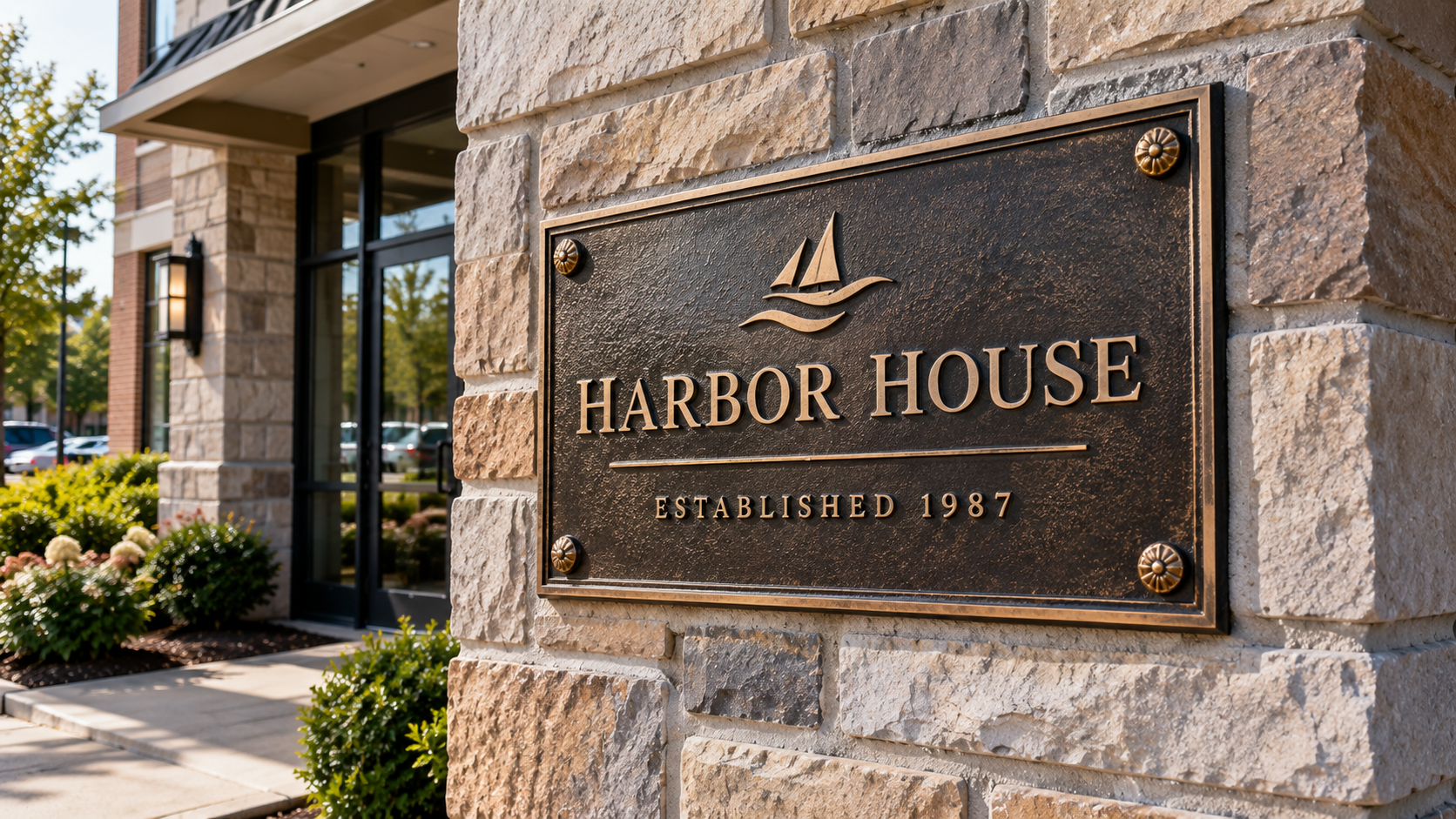
Custom metal plaques on Long Island should be chosen for location, weather exposure, readability, finish, and mounting method. Coastal air, winter road salt, landmark rules, and small text requirements can all affect the right material. For exterior plaques, durability and legibility matter as much as appearance.
Custom metal plaques need to be specified for Long Island conditions
A custom metal plaque is not just a decorative plate with words on it. For businesses, municipalities, schools, medical offices, houses of worship, property managers, and developers, it is often a permanent marker of identity, recognition, history, or direction.
On Long Island, the environment matters. Ocean air, humidity, freeze-thaw cycles, and winter road salt can shorten the life of the wrong metal or finish. A plaque that looks sharp indoors may not perform the same way on an exterior wall in a coastal village, near a marina, or along a heavily salted roadway.
Empire Sign & Design helps organizations think through the full plaque system: material, finish, text size, mounting, placement, and installation. If your plaque is part of a larger exterior sign program, it may also connect naturally with architectural signage or building signage for a consistent property presentation.
The right metal depends on exposure, detail, and desired appearance
The best plaque material depends on where the plaque will live and what it needs to communicate.
| Plaque Material | Best Fit | Key Consideration |
| Bronze | Dedication plaques, memorials, historic properties, upscale recognition | Classic appearance with strong permanence |
| Brass | Interior recognition, office plaques, donor walls, decorative plates | Warm finish, best protected from harsh exterior exposure |
| Aluminum | Lightweight exterior or interior plaques, directional markers, budget-conscious projects | Versatile and corrosion-resistant when finished properly |
| Stainless Steel | Modern commercial plaques, exterior nameplates, coastal applications | Grade selection matters on Long Island |
| Etched Metal | Fine text, logos, maps, donor lists, detailed layouts | Better for small lettering than cast plaques |
One important local factor: standard 304-grade stainless steel can develop “tea staining,” a rust-like surface discoloration, when exposed to Long Island’s ocean air and winter road salt. This is especially relevant near the North Shore and South Shore. For exterior plaques in coastal conditions, 316 marine-grade stainless steel is often the smarter specification.
That detail can be the difference between a plaque that still looks professional years later and one that starts showing surface staining after only a few seasons.
Plaque readability should drive the design before fabrication begins
Many plaque problems start with trying to fit too much information into too small a space. A 12″ x 12″ cast plaque cannot carry an entire corporate mission statement, complex map, long donor list, and detailed logo while remaining readable from a normal viewing distance.
A practical rule: the more detailed the content, the more carefully the fabrication method must be chosen.
Use this decision sequence before approving a plaque layout:
- Define the primary reader. Is the plaque meant for visitors walking past, employees entering a building, donors viewing a wall, or pedestrians reading a historic marker?
- Decide the viewing distance. Text that works at arm’s length may fail completely from six feet away.
- Prioritize the message. Names, dates, building identity, and dedication language should be separated from secondary details.
- Match the method to the detail. Cast plaques suit bold lettering and dimensional character. Etched bronze or brass plates work better for small text, maps, seals, and intricate linework.
- Proof at real size. A plaque should be reviewed at actual scale whenever possible, not only as a screen image.
Operator insight: Long Island plaque buyers often underestimate how much fabrication method affects legibility. If the text is small or detailed, switching from a cast plaque to an etched plate can preserve the design without forcing unreadable metal lettering.
For projects that require design review, Empire’s design proofing process helps confirm layout, scale, spacing, and readability before production moves forward.
Finishes should balance appearance, contrast, and local requirements
Metal plaque finishes are not only aesthetic. They affect visibility, maintenance, and whether the plaque feels appropriate for the building.
Common finish considerations include:
- Dark oxidized bronze: Traditional, highly readable, and often appropriate for historic or formal settings.
- Polished brass or bronze: Bright and high-end, but more reflective and maintenance-sensitive.
- Brushed stainless steel: Modern, clean, and suitable for contemporary commercial environments.
- Paint-filled lettering: Improves contrast and helps text stand out from the background.
- Textured backgrounds: Add depth and reduce glare, especially on cast plaques.
Historic corridors on Long Island, including areas such as Sag Harbor, may enforce strict rules about plaque size, finish, background texture, and placement on landmarked structures. A bright brass plaque that looks attractive in isolation may not be acceptable on a landmarked facade where a dark oxidized bronze finish is expected.
This is why finish selection should happen with the installation setting in mind, not from a sample alone.
Mounting method affects security, appearance, and installation timing
A plaque’s mounting system should be chosen before fabrication because hole placement, studs, spacers, and wall conditions can all affect the finished product.
Typical mounting options include:
- Concealed stud mounting for a clean, permanent appearance on masonry, stone, or concrete.
- Through-bolt mounting where visible hardware is acceptable or extra strength is needed.
- Standoff mounting for a dimensional look, often used in interiors or modern lobbies.
- Adhesive mounting for select indoor applications where drilling is not ideal.
- Frame or rail systems when plaques need to align with a larger recognition wall.
Installation surfaces matter. Brick, stucco, stone, concrete, wood, and drywall each require different anchors and preparation. Exterior installations also need attention to water intrusion, expansion, and long-term stability.
For businesses coordinating a plaque with other signage, Empire’s installation service helps ensure the finished piece is mounted securely, level, and in the right visual location.
Custom plaques serve recognition, identification, and permanent wayfinding
Custom metal plaques are used across Long Island for many commercial and institutional purposes, including:
- Building identification plaques
- Dedication and memorial plaques
- Donor recognition walls
- Historic property markers
- Professional office nameplates
- Room, suite, and department plaques
- Municipal and civic recognition
- School, university, and athletic awards
- Real estate development markers
- Directional or informational plaques
The strongest plaque projects usually start with a clear purpose. A donor recognition plaque should feel prestigious and readable. A historic marker should fit the property and any local review standards. A building plaque should support the site’s professional appearance and be durable enough for daily exposure.
Quality and timeliness matter here because plaques are often tied to opening dates, dedication ceremonies, donor events, construction closeouts, or municipal schedules. Starting with the right specifications helps prevent delays, redesigns, and avoidable replacement costs.
Empire Sign & Design helps Long Island organizations get plaques right the first time
A custom plaque should look permanent because it was planned properly from the beginning. That means choosing the right metal for the environment, the right fabrication method for the content, the right finish for the setting, and the right mounting method for the surface.
Empire Sign & Design works with Long Island businesses and organizations on custom signs, plaques, architectural signage, fabrication, and installation. If you need a plaque for a building, lobby, dedication, donor wall, historic property, or commercial site, start with Empire’s custom metal plaques service so the finished piece fits both the message and the location.
Frequently Asked Questions About Custom Metal Plaques on Long Island
What is the best metal for an outdoor plaque on Long Island?
For many exterior Long Island locations, bronze, properly finished aluminum, or marine-grade stainless steel may be appropriate depending on the project. Near coastal air or salt exposure, 316 stainless steel is often preferred over standard 304 stainless because it better resists tea staining and surface corrosion.
Are cast plaques or etched plaques better for small text?
Etched plaques are usually better for small text, fine lines, detailed logos, maps, or long dedication copy. Cast plaques are excellent for bold, dimensional lettering, but they are not ideal when too much small information is forced into a limited space.
Do historic areas on Long Island have plaque restrictions?
Some historic districts and landmarked properties may have rules for plaque size, metal finish, texture, placement, and overall appearance. Areas with historic corridors, such as Sag Harbor, may require more careful finish and placement decisions before fabrication.
How should a plaque be mounted on brick or stone?
Brick and stone plaques are often mounted with concealed studs, anchors, or through-bolts, depending on the wall condition and plaque weight. The mounting method should be selected before fabrication so the holes, studs, and installation pattern align correctly.
Can a custom metal plaque match other signs on a property?
Yes. A plaque can be designed to coordinate with lobby signs, building signs, wayfinding signs, and architectural signage. Matching finish, typography, spacing, and placement helps the plaque feel like part of a complete sign system rather than a separate add-on.
Next Step for Empire Sign & Design
Request a consultation
Back


