


Commercial Sign Permits in Nassau County: What Businesses Should Know Before Design and Installation
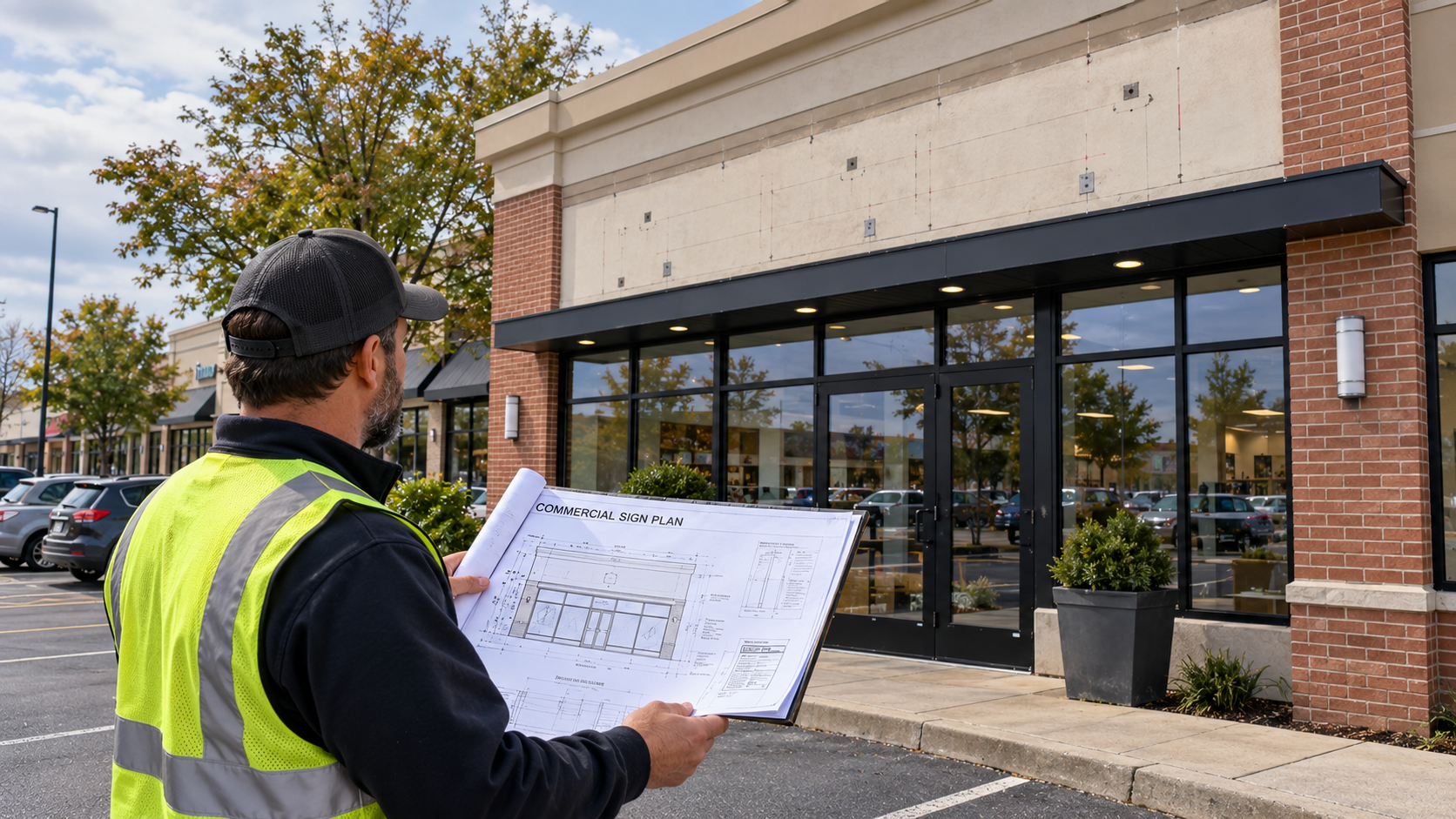
In most Nassau County locations, commercial signs require municipal approval before installation. The key is identifying the correct authority first: a town permit may not apply inside an incorporated village. Businesses should confirm jurisdiction, landlord approval, sign code requirements, drawings, and permit status before fabrication or installation begins.
Nassau County sign permits start with jurisdiction, not design
For business owners, the first mistake is assuming “Nassau County” has one simple sign permit process. It does not.
Long Island is divided into major townships, but it also contains many incorporated villages with their own independent rules. In practice, that means a business may be located in the Town of Hempstead, Town of North Hempstead, or Town of Oyster Bay for some purposes, while still being subject to a village sign code for signage approval.
Operator insight from local permitting work: a permit approved by the Town of Hempstead is not valid inside the Village of Garden City if the property is under Garden City’s sign jurisdiction. Incorporated villages can enforce their own sign codes, application requirements, review boards, and approval timelines.
That is why the permit process should begin with one question: Which municipality actually controls the sign at this address?
Before investing in design or fabrication, confirm:
- The property’s town, village, or city jurisdiction
- Whether the building is in a special district, downtown overlay, or shopping center
- Whether landlord approval is required before municipal filing
- Whether the sign type, size, illumination, and placement are allowed
- Whether professional drawings, site plans, or electrical documentation are needed
A sign can be beautifully designed and still be rejected if it exceeds the local code or is submitted to the wrong permitting authority.
Landlord approval does not replace municipal sign approval
Many business owners believe that if their landlord approves the sign, the sign is approved. That is not how sign permits in Nassau County typically work.
A landlord can approve a sign under the lease, shopping center rules, or building standards. The municipality still decides whether the sign complies with local code. Both approvals may be necessary, and one does not automatically create the other.
For example, a landlord may approve:
- A raceway-mounted channel letter sign
- A specific storefront sign size
- A color, logo, or placement shown in the tenant criteria
- A sign package for a shopping center or commercial property
The village or town may still review:
- Total square footage
- Projection from the building
- Illumination type and brightness
- Setbacks and sightline concerns
- Mounting location
- Electrical compliance
- Historic district or architectural restrictions
If you are planning a new storefront sign, illuminated sign, blade sign, awning sign, or building sign, Empire Sign & Design can help align design, fabrication, and permit considerations early in the process. Review the company’s Permits service page or explore Storefront Signs before finalizing your sign plan.
The safest permit path follows a clear pre-installation sequence
The permitting process can vary by municipality, but the safest sequence is usually consistent: verify first, design second, install last.
Use this practical checklist before moving forward with a commercial sign in Nassau County:
- Confirm the correct municipality
Do not rely only on the ZIP code or mailing address. Check whether the property is inside an incorporated village.
- Review landlord or property management requirements
Shopping centers, office parks, and mixed-use buildings often have their own sign criteria.
- Identify the applicable sign code
The code may limit square footage, height, projection, illumination, materials, or number of signs.
- Prepare compliant sign drawings
Municipalities often need scaled drawings showing dimensions, placement, colors, mounting method, and electrical details when applicable.
- Submit the permit application before fabrication or installation
Avoid building a sign that may need redesign after municipal review.
- Wait for formal permit issuance
Verbal comments, landlord approval, or application submission are not the same as an issued permit.
- Schedule installation after approval
Installation should occur only once the required approvals are in place.
This sequence protects the business owner from redesign costs, installation delays, and enforcement problems.
Installing before approval can create expensive consequences
Installing a sign before the formal permit is issued is one of the most expensive shortcuts a business can take.
In Nassau County municipalities, premature installation can trigger a stop-work order, municipal summonses, and daily fines. Depending on the jurisdiction and violation, daily penalties can often range from $250 to $1,000 or more per day until the issue is resolved.
The financial risk is not limited to fines. A business may also face:
- Removal or modification costs
- Re-fabrication expenses
- Delayed opening or rebranding timelines
- Landlord disputes
- Failed inspections
- Additional permit or variance requirements
The practical rule is simple: do not install first and solve the permit later. If the sign is visible from the exterior, mounted to a building, illuminated, freestanding, projecting, or regulated by a local sign code, permitting should be treated as part of the project timeline from the beginning.
Sign design should account for permit limits before fabrication
A strong commercial sign has to do more than look good. It needs to fit the building, represent the brand, attract customers, and comply with the local code.
That is why permit-aware design matters. A sign company that understands the relationship between design and municipal review can help reduce back-and-forth before the sign reaches fabrication.
Common design details that may affect approval include:
- Overall sign dimensions
- Letter height
- Cabinet depth
- Raceway placement
- Illumination method
- Mounting surface
- Projection from façade
- Distance from neighboring signs
- Electrical connection details
- Window coverage percentage for graphics or lettering
This is especially important for illuminated signs, exterior building signs, and storefront signage. If your project includes lighting, dimensional letters, or a large façade sign, reviewing the applicable requirements early can prevent a design from being scaled back later. Empire Sign & Design’s work across Illuminated Signs and Building Signage can help business owners think through both visibility and compliance before installation.
Timelines depend on the municipality and completeness of the application
There is no single universal timeline for sign permits in Nassau County. Approval time depends on the municipality, the type of sign, whether the application is complete, and whether additional board review, landlord documentation, or revisions are required.
A straightforward sign application may move more quickly when drawings, property authorization, and technical details are complete. A more complex project may take longer if it involves illumination, a variance, architectural review, historic district rules, or unclear jurisdiction.
Business owners can help avoid delays by having these items ready:
- Accurate property address and tenant information
- Landlord or property owner authorization
- Scaled sign drawings
- Sign dimensions and materials
- Mounting details
- Electrical information, when applicable
- Site photos or façade elevations
- Any shopping center sign criteria
Quality and timeliness depend on preparation. The more complete the permit package is before submission, the fewer obstacles usually appear later.
FAQ: Sign permits in Nassau County
Do I need a permit for a storefront sign in Nassau County?
In most cases, yes. Exterior storefront signs are commonly regulated by the local town, village, or city. Requirements may depend on size, placement, illumination, and sign type. Always confirm the correct jurisdiction before fabrication or installation.
Is a landlord’s approval enough to install my sign?
No. Landlord approval is not the same as municipal approval. A landlord may approve the sign for lease or property purposes, but the town, village, or city may still require a formal sign permit before installation.
What happens if I install a sign before the permit is issued?
Installing before approval can lead to stop-work orders, summonses, removal requirements, and daily fines. In some municipalities, daily fines can reach hundreds or even more than $1,000 per day until corrected.
Why does the village matter if my business is in Nassau County?
Many Nassau County properties are located inside incorporated villages that enforce their own sign codes. A town-level approval may not apply if the village has jurisdiction over the property.
When should I start the sign permit process?
Start before final design, fabrication, or installation scheduling. The best time to address permitting is when the sign concept is being planned, not after the sign has already been built.
See how permits work locally in Great Neck, Mineola and Port Washington.
Next Step for Empire Sign & Design
Request a consultation
Back


